︎Thirty Six Point Eight Hours ︎Dana Karwas︎Thirty Six Point Eight Hours ︎Dana Karwas︎Thirty Six Point Eight Hours ︎Dana Karwas
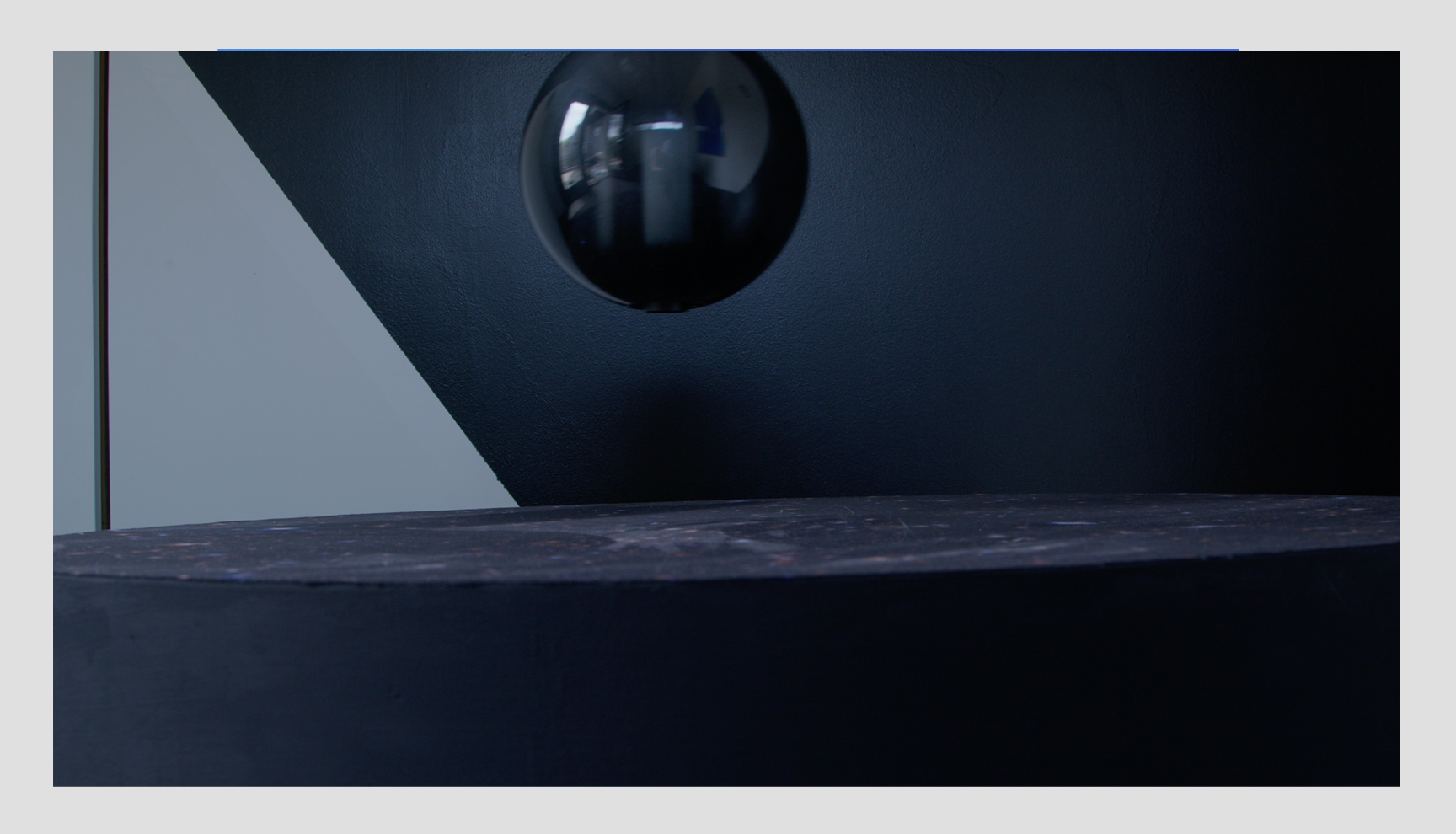
Pendulum, 2025. Carbon fiber, wooden drum, velvet, custom electronics. Acrylic, 5’ x 10’. Image by Dana Karwas.
Thirty Six Point Eight Hours
What I’m Working On
Dana Karwas
I think a lot about how to connect the hyper-technical with a kind of softness. It was amazing to make stuff with my hands, form it, shape it, and play with these materials. There was a state of exertion, and a sense of chaotic play.
I developed these pieces for my solo show at Spill 180 during early 2025. I titled it “Thirty Six Point Eight Hours,” which is a riff on Foucault’s Pendulum. I did the math with AI to find out how many hours it would take for the pendulum to rotate the Earth in full from Red Hook, Brooklyn, where the gallery is. The answer was 36.8 hours.
These works came to be through ongoing conversations with many people. I love seeing the reactions and responses. I see this collection as phase one, and putting it together was like problem-solving a weird dream.
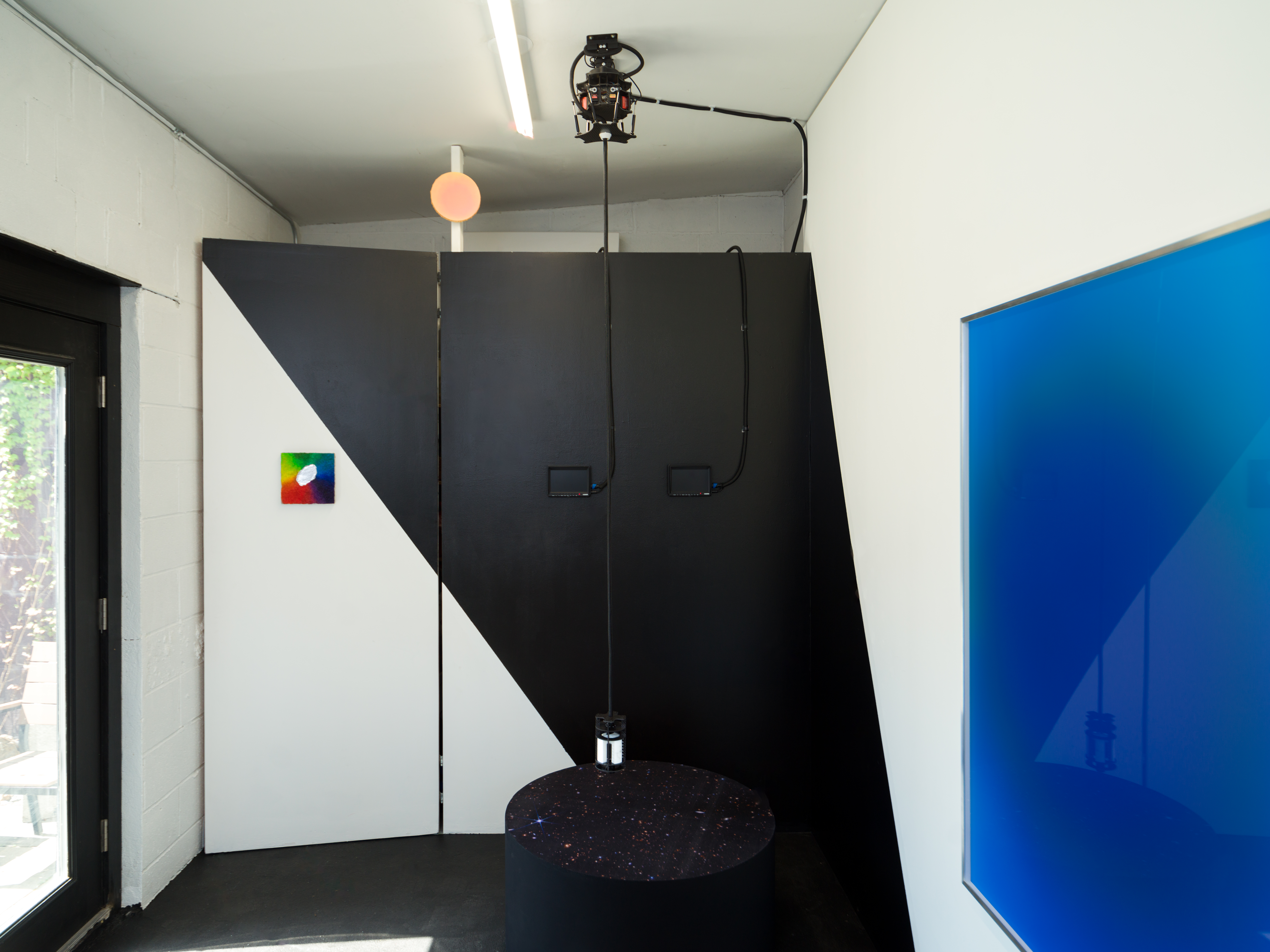
Pendulum, 2025. Carbon fiber, wooden drum, velvet, custom electronics. Acrylic, 5’ x 10’. Image by Jack Ramsdell.
The centerpiece is the pendulum, which I made first. The initial spark came as I was thinking about movement. I’m a runner. When I unexpectedly (and rarely) experience runner’s high—similar to an astronaut’s overview effect, but for terrestrials—it’s an incredible feeling of having a conscious body! But I can only get there with miles and miles of repetitive motion: right, left, right, left, right, left. Then it suddenly feels hypnotic and trance-like. That’s when the visual came to me: the pendulum as a hypnosis tool, with a camera embedded in it, tracing a line on a surface. It’s about taking something static, and adding movement to it, then making, or revealing, an image from it. So what would this line look like? With the swinging camera, and to accommodate for the distance and arc, it would actually have to be a warped line: skinny in the middle, and fat at the ends. On the screen next to it is a live feed, where you can watch this warped line as a flat line, given the pendulum’s movement. It’s a representation of a camera’s relationship to reality.

Come Towards Me, 2025. Pigment print on archival paper, 40” x 52”. Image by Jack Ramsdell.
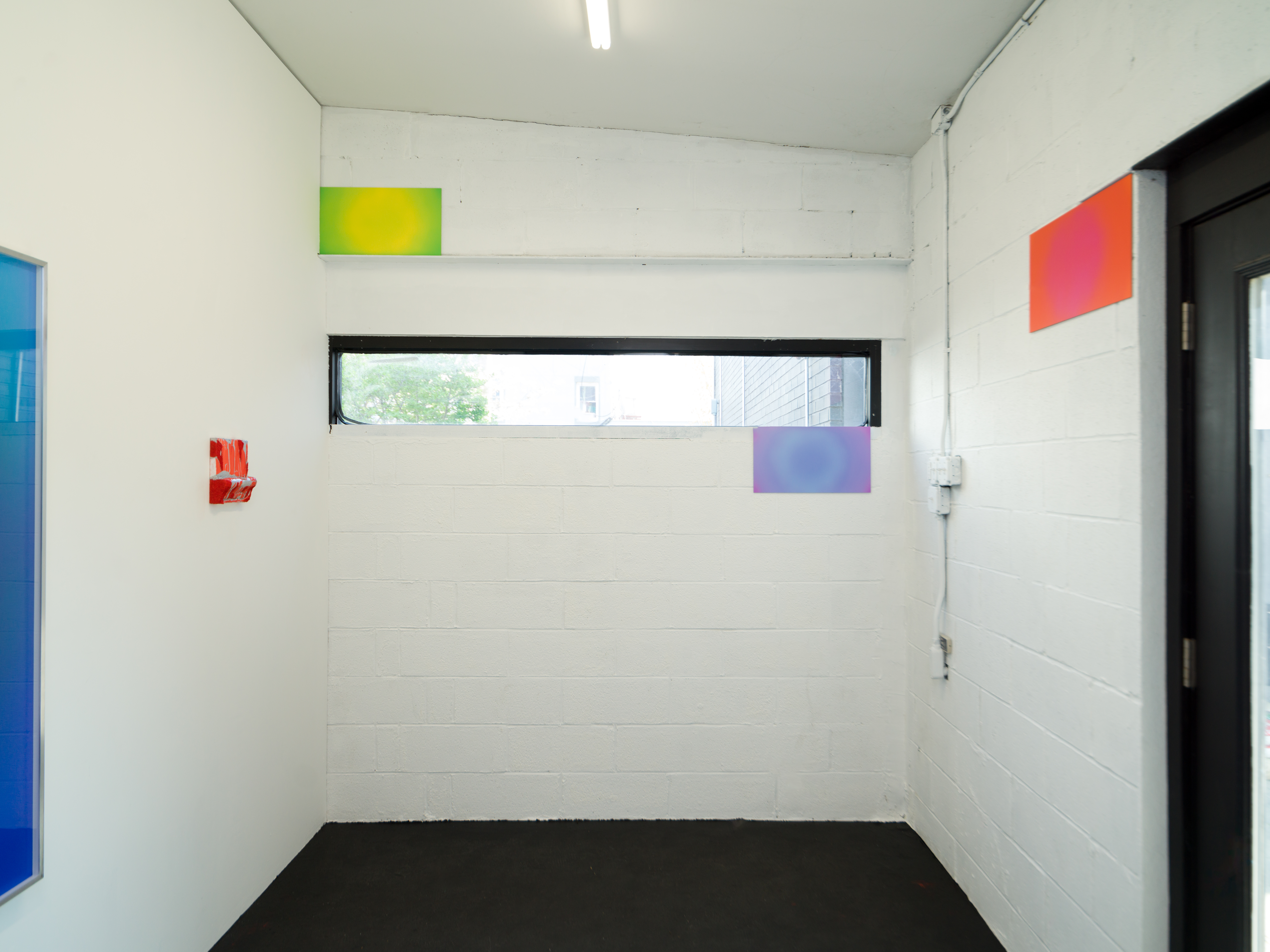
Come Towards Me series, 2025. Pigment print on archival paper, various sizes. Image by Jack Ramsdell.
Following this, I made Come Towards Me, which is also based on movement: redshift and blueshift. Based on cosmological light shifting, blue is moving towards you, and red is moving away. I went from a physical mechanism to trying to figure out how to get a feeling from that mechanism. I let the pendulum swing and I captured a shot every few seconds. Then I compressed 5,000 of those snapshots into one image. All four of those prints are different colorizations of the same. I wanted to find an image that felt as if you were in a James Turrell space and tuning into the Ganzfeld effect.
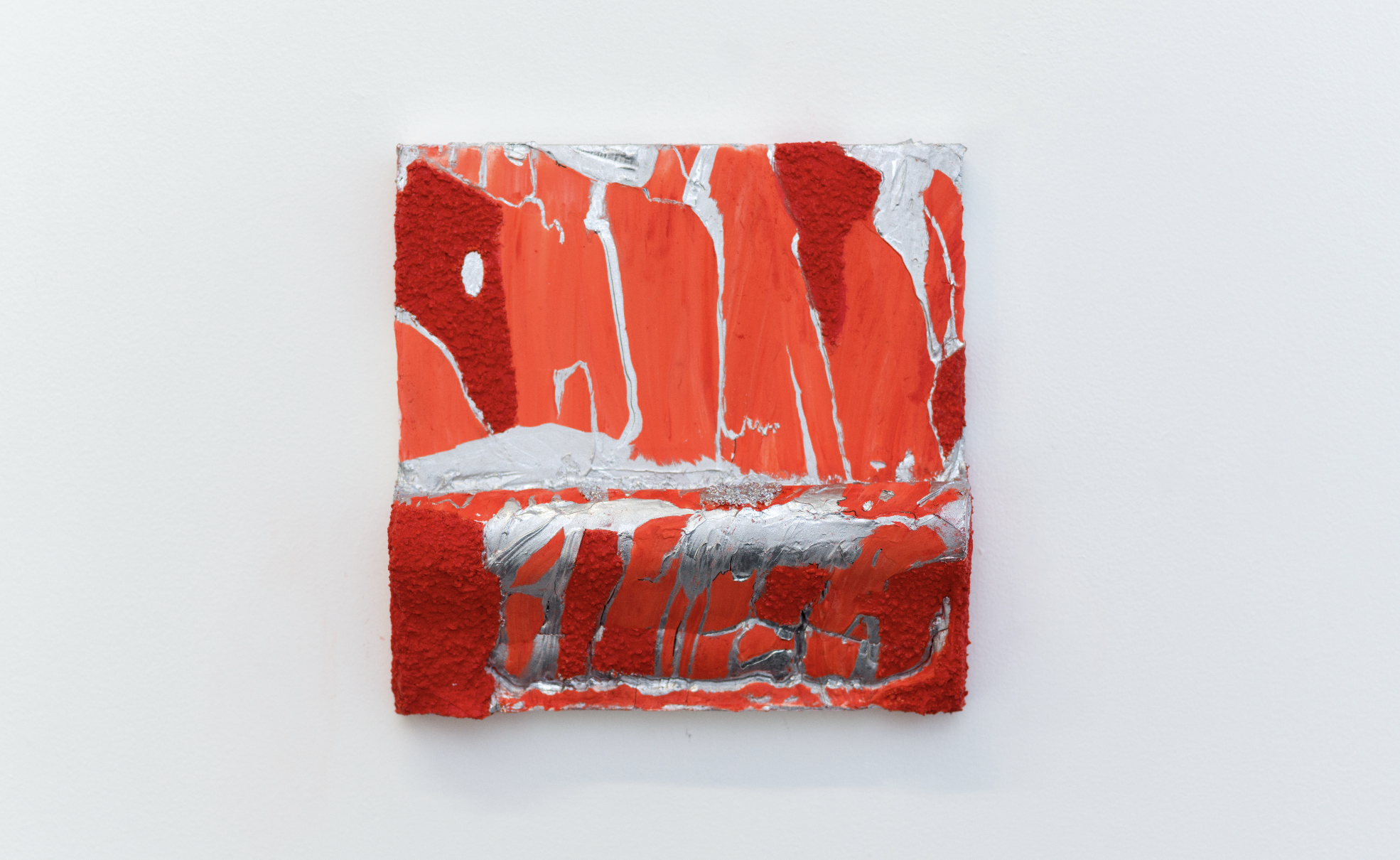
Event Horizon, 2025. Acrylic on panel, 8” x 8”. Image by Dana Karwas.
This one is more abstract. I was thinking about the edges of the known and unknown. Black holes and the event horizon. No human is ever going to see them. If the pendulum’s looking at an infinite line, what is the edge? It’s terrifying and mysterious. This led me to want to make a painting with a very beautiful curve in it, that dipped on the surface. I tried all kinds of ways, but in the end I took a closet rod and just shoved it into the painting, Madeline Gins-style. The rod creates the pulling of you towards me. It has an everyday artifact feel to it. It was my escape from the computer. It was the most fun and wild to make.
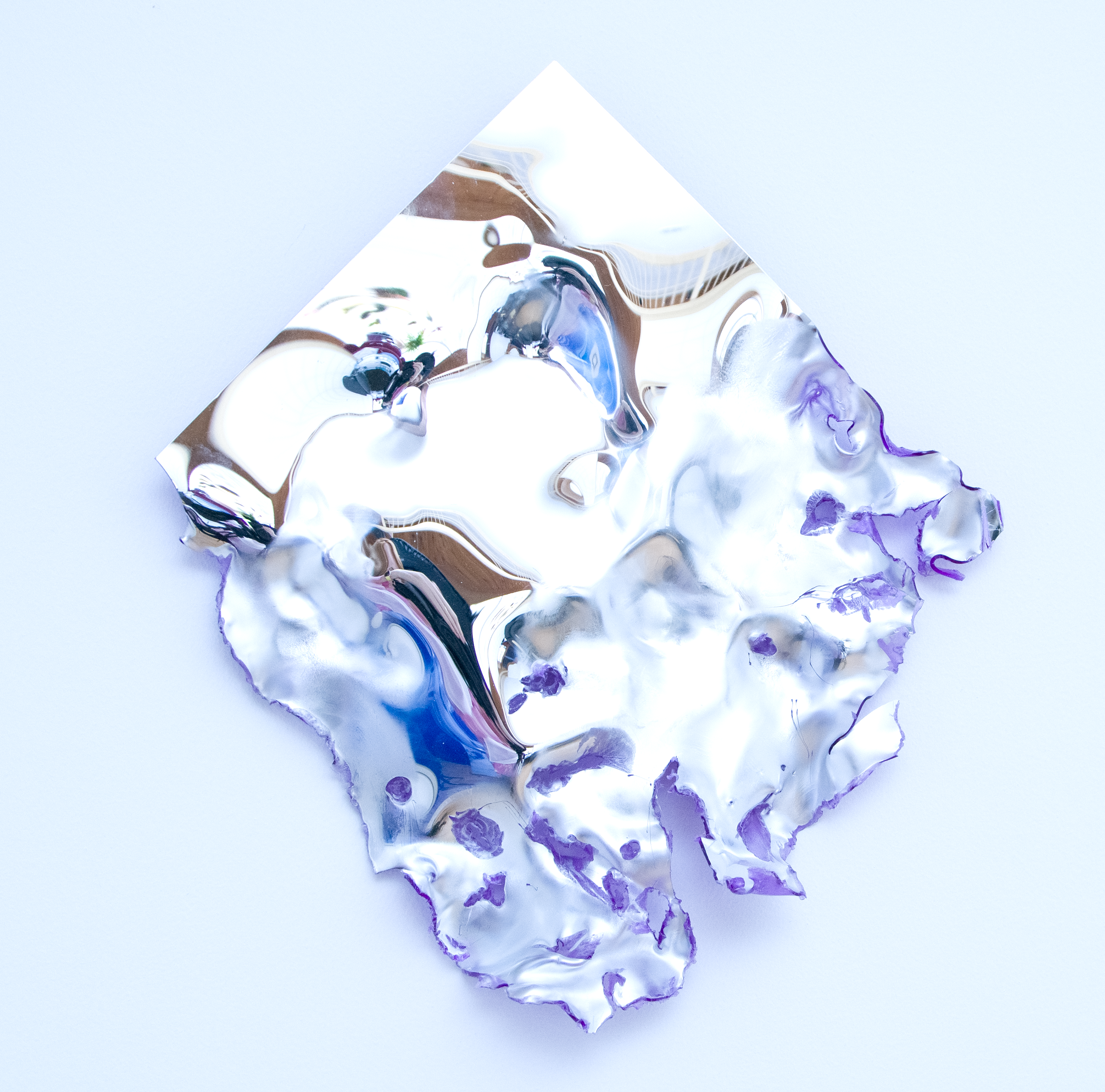
Cosmological Funhouse Mirror, 2025. Plexiglass, 10” x 10”. Image by Dana Karwas.
I like impossible materials that can’t be figured out. A lot of people think this is made of glass, but it’s plexiglass. Maybe it’s because they can’t get near it, or touch it. Once they touch it, it becomes very clear it is not glass. Again, this was to get away from the computer or technology. I started manipulating a standard, square piece of plexi with heat and forces to make it unrecognizable. It took two weeks to make. I broke the first few, because sometimes it would get too hot and snap. It’s like a funhouse mirror at a kid’s museum: when you look into it, it pulls your image up or to the side. Your body and head are still there, but the mirror is telling you something different. This celebrates that idea.
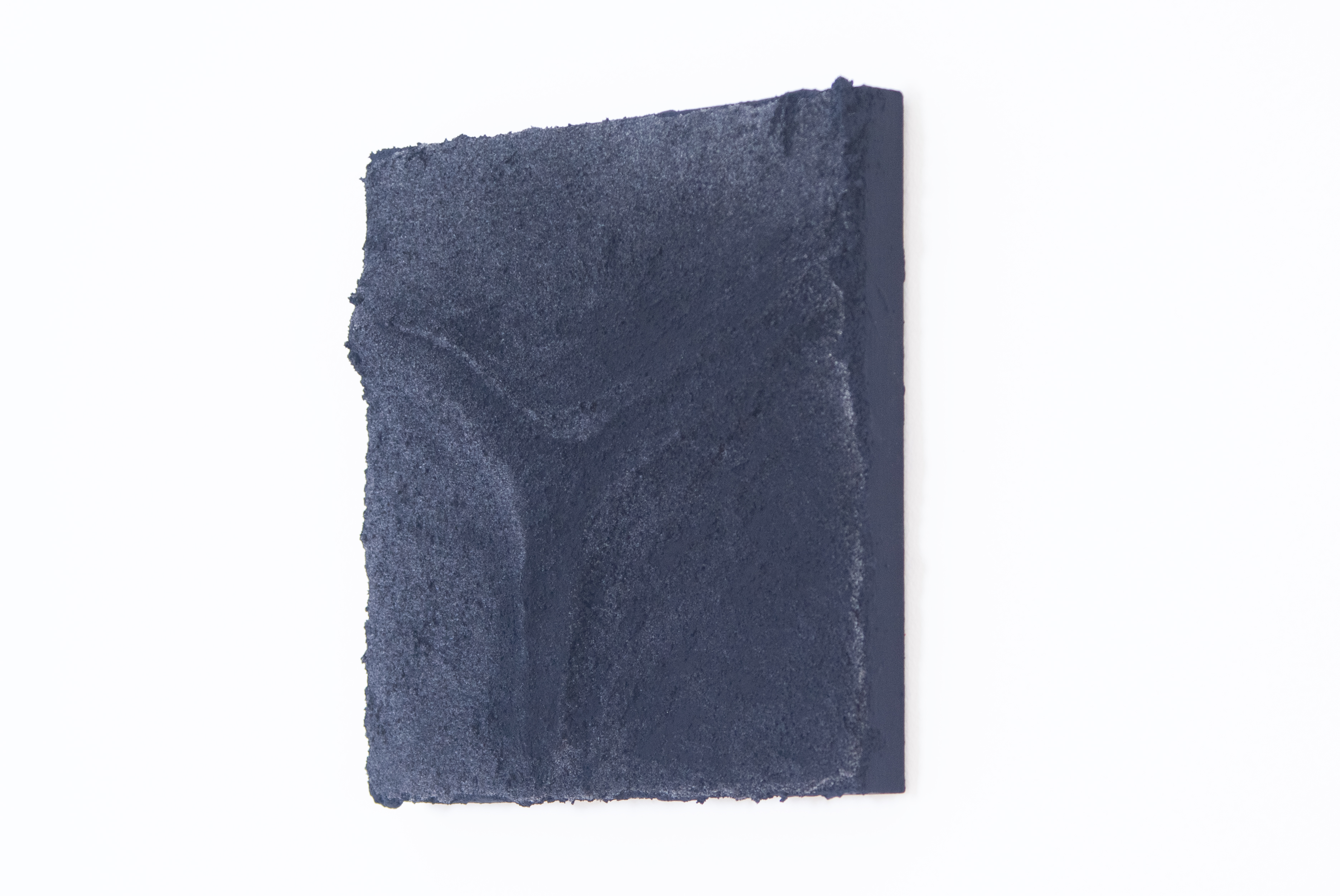
Big Bang Divining Rod, 2025. Acrylic and volcanic pumice on panel, 8” x 8”. Image by Dana Karwas.
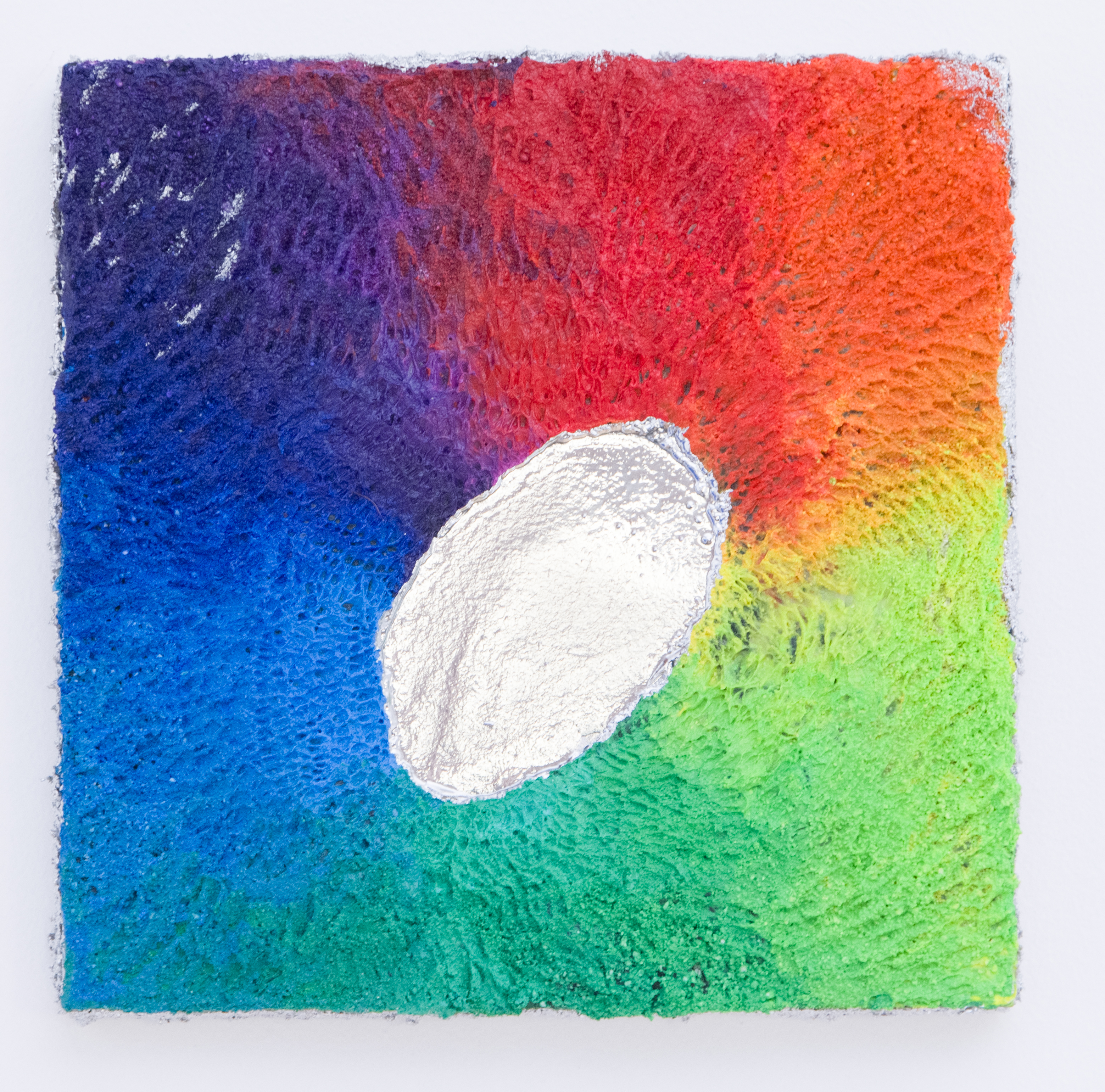
Electromagnetic Quicksand, 2025. Acrylic on panel, 8” x 8”. Image by Dana Karwas.
We only see a small part of the electromagnetic spectrum, and the human eye sees a rainbow of color. I wanted to give this some physicality. I’d been reading about Henri Matisse, and his experiments in Pointillism, Divisionism, and Fauvism. He and others once tried a system where the direction of each brushstroke would correspond to the color they were using. If they were using red, the stroke would go up and down. If they were using orange, the stroke would move at a specific angle, and so on. I introduced this here. There’s speed and movement built into the little tiny strokes to introduce directionality in the quicksand, so that it feels like it is pulling them in, almost like a rainbow black hole. The mirror in the middle connects to the funhouse mirror idea, and also to using different systems in digital versus physical abstraction.
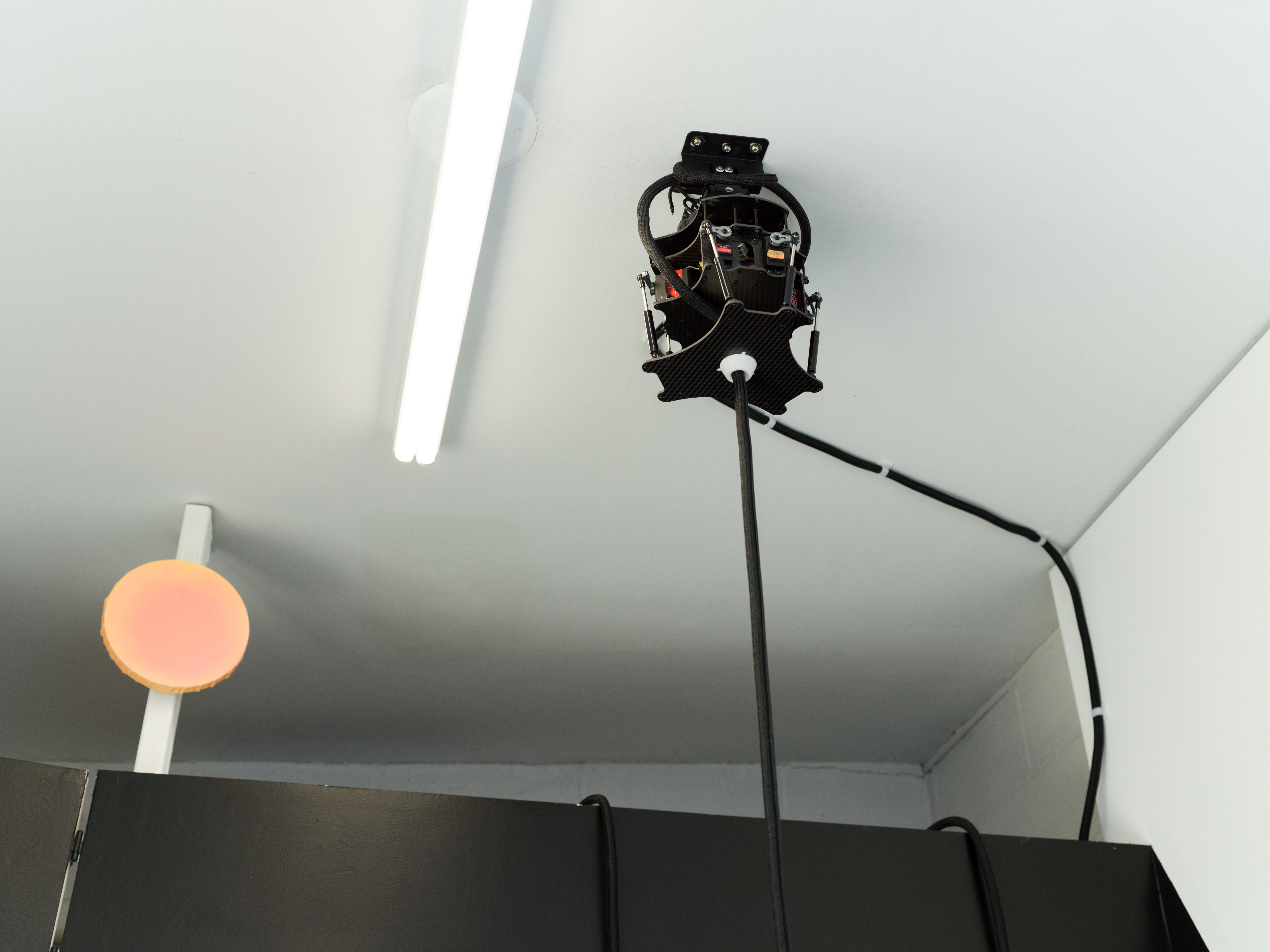
Proto-Star Mama, 2025. Pigment print on linen, 8” diameter. Image by Jack Ramsdell.
This was purely an accident. I was color correcting images, and I came across this beautiful peachy pink. At first I thought, these two tones look so nice together. Then I zoomed out. I thought, “Oh, it’s a nipple!” I had a good laugh about it, about whether a boob needed to be on the show. I decided to add it. I was breastfeeding my infant every two hours, and thought of what a baby sees—something fuzzy and not in focus. When I looked at all of these pieces, I thought, “Have I just been making ‘Mama?’ ” Perhaps that is what the universe is. There was definitely an instinctual, motherly, human element throughout the show, and this feels like the nightcap.